Simulation in Cardanit
The Cardanit simulation feature enables you to test the performance of a process and visualize how it impacts your organization before implementing it in a real production environment.
Simulating your processes enables you to validate and fine tune the process without causing disruption to everyday operations. It helps you determine the impact the process has on operations, quickly identify issues and bottle necks, optimize resources and make better, more informed decisions.
Access the simulation environment
The first time you open the Simulate tab you’ll be asked to start setting up the simulation model.
-
In the Simulate tab, click Start.
This opens the process in the Simulate tab.
Simulation environment
Before you start, take some time to get to know the layout of the simulation environment.
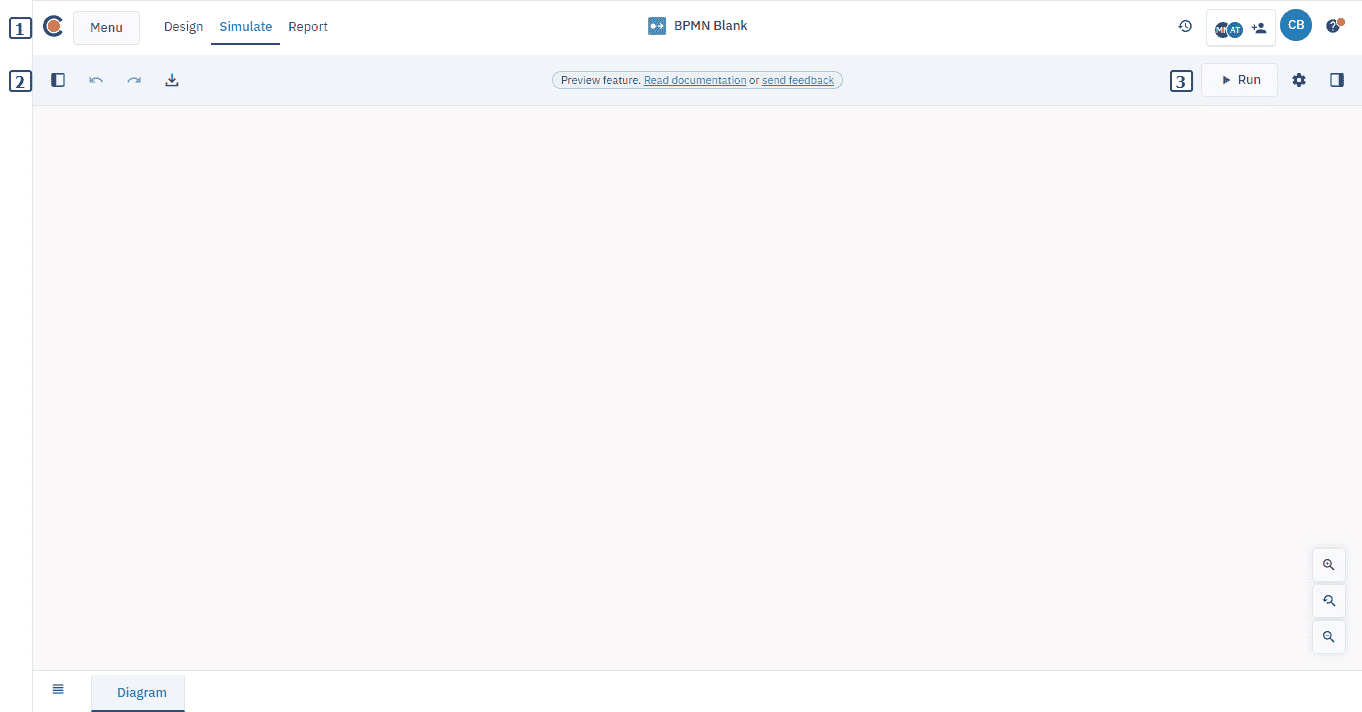
-
Header
-
Cardanit logo: click to go to the Home page.
-
Menu: Go to My Files, rename the project, and hide or show collaborator cursors.
-
A tab menu that gives you access to the Design, Simulate and Report pages.
-
The project name.
-
Access to version history.
-
See who the project is shared with and share the project with others.
-
View your profile.
-
Access the help section.
-
-
Definitions panel
Create and manage the calendars and resources you use in your simulation.
Click
to open or close the Definitions panel. -
Main toolbar
Use the main toolbar to set up, run and track your simulations:
-
Diagram dropdown list: Switch between diagrams in your project.
-
Undo and redo: Reverse or reapply recent actions.
-
Download: Download the BPMN model, including its simulation parameters.
-
Simulations: See how many simulations have been run. Click to open the full list of simulations.
-
Run: Run the simulation.
-
Simulation settings
: Set the base units for time and cost.
-
-
Parameters panel
Configure parameter values for the elements in your process.
Click
to open or close the Parameters panel. -
Diagram
Select an element in the diagram to view and configure its simulation parameters.
-
View toolbar
The view toolbar provides tools to adjust your view of the diagram. Use it to zoom in, zoom out, reset the view, or open the mini-map for easier navigation of large or complex diagrams.
-
Diagram tab bar
Switch between the diagrams in your project.